
Why Climate Action, Climate Adaptation and Clean Air Are Among the Smartest Investments
“Hidden Assets”? A recent UN report reveals that tackling climate change and air pollution together can do more than save lives – it can generate substantial returns that benefit entire economies.
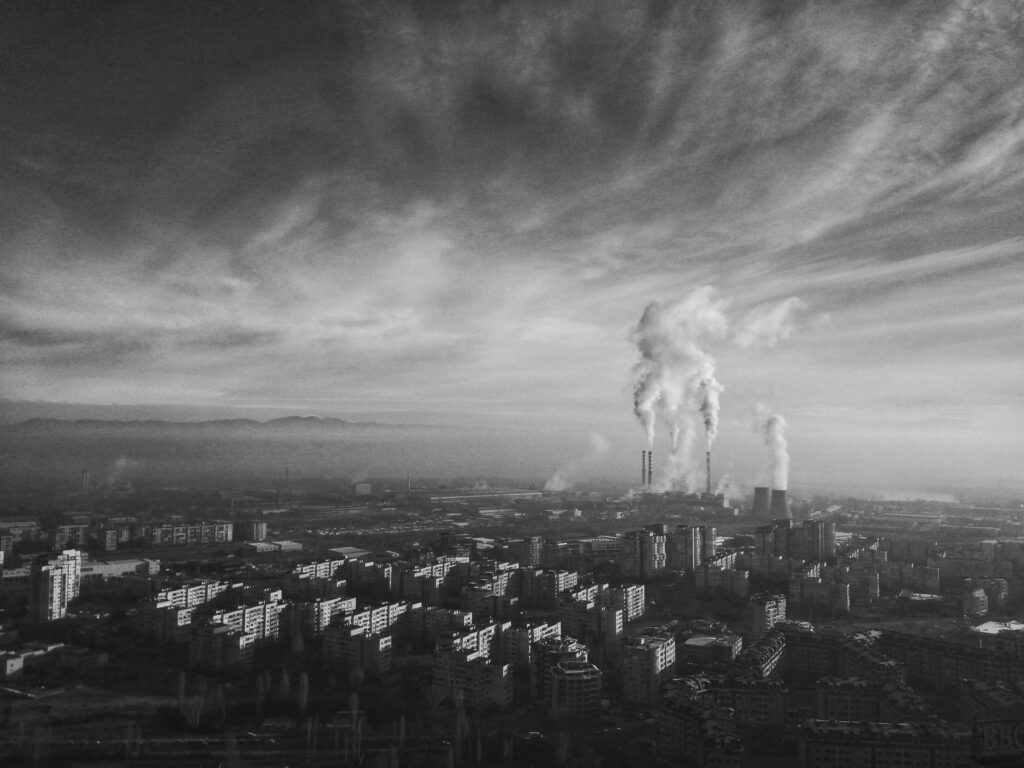
Photo: Yaroslav Boshnakov | Unsplash
A $15 Return for Every Dollar Invested – with Market Benefits Exceeding Costs Within Just Ten Years
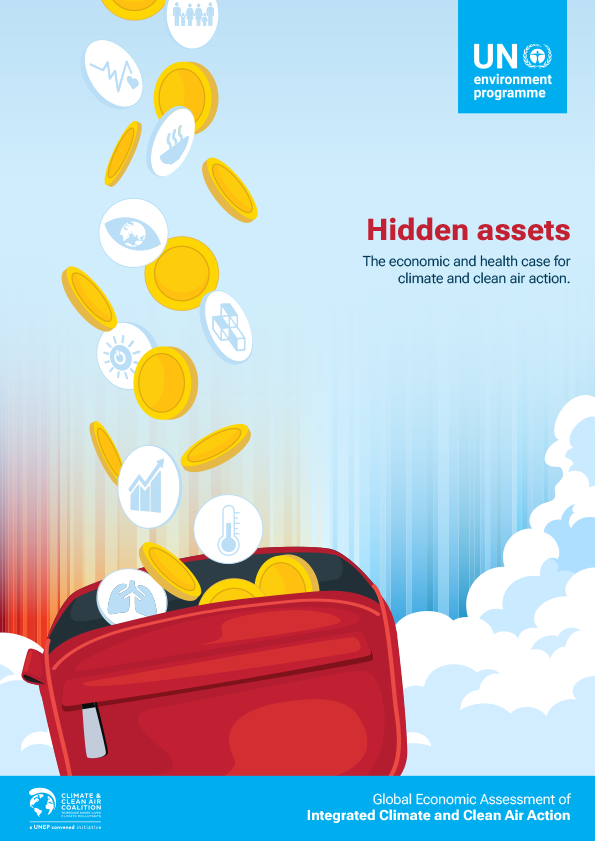
„Hidden Assets: The Economic and Health Case for Climate and Clean Air Action”, the new global economic assessment of integrated climate and clean air measures by the Umweltprogramms der Vereinten Nationen (United Nations Environment Programme UNEP) and the Climate and Clean Air Coalition (CCAC), delivers a clear message: Climate action and air pollution control are too often treated as separate challenges, “when in reality, they are closely interconnected”.
The report’s authors analysed 25 proven measures across six sectors, ranging from energy and industry to transport, agriculture and waste management. The findings are compelling: Addressing both challenges through an integrated approach could generate on up to $15 US-Dollar – in societal and economic benefits for every dollar invested, with an internal rate of return of 60%.
Klimareporter highlights, that „these benefits stem from lower healthcare costs, increased labour productivity, reduced climate-related damage and improved quality of life. Even when the monetary value of avoided premature deaths and other non-market welfare benefits is excluded, the return remains at four dollars for every dollar invested”.
.
Even when considering only direct market benefits, such as lower healthcare costs and higher labour productivity, the benefit-cost ratio remains at 4:1. Furthermore, these market benefits alone exceed implementation costs within just ten years.
A revealing comparison puts these figures into perspective: Implementing all 25 measures would cost approximately 0,7 % of global GDP annually. In 2022, however, governments worldwide spent 2.18% of global GDP on explicit fossil fuel subsidies – almost three times as much on perpetuating the problem as it would cost to address it. Put differently, redirecting just one-third of these subsidies would be sufficient to fully finance all 25 measures..
UNEP Executive Director Inger Andersen sums it up: “For too long, we have viewed climate action as a cost to be managed and air pollution as an unfortunate by-product of development. In reality, clean air is a driver of development, health, food security and energy security.”
Crucially, every year of delayed action costs the global economy more than $1.5 trillion in lost benefits – equivalent to approximately 0.5 % of global GDP.
Air Pollution: An Underestimated Public Health Risk
The report paints a particularly alarming picture of the health impacts of air pollution. In 2025 alone, starben an estimated 6.4 million people died prematurely as a result of exposure to fine particulate matter (PM2.5) and ground-level ozone. A further two million deaths were attributed to household air pollution, including almost 300,000 children. Moreover, 95% of all these deaths occurred in low- and middle-income countries.
The wide range of associated health conditions is particularly concerning. Every year, exposure to PM2.5 is linked to 5.5 million new cases of childhood asthma, 4.2 million heart attacks, two million cases of dementia, and millions of additional cases of chronic obstructive pulmonary disease (COPD), diabetes and stroke. This represents approximately one in five new cases of each of these conditions worldwide.
If all 25 measures were fully implemented, a cumulative total of 144 million premature deaths could be prevented by 2050, including 96 million through reduced outdoor air pollution alone. On the climate front, CO₂ emissions could be halved by 2050, methane emissions reduced by 60% and emissions of particulate matter precursors cut by approximately 70%. Together, these measures could reduce global warming by 0.34°C by the middle of the century.
What’s Holding Us Back?
So, what is preventing progress? According to the report, the biggest barriers are neither technical nor economic. Instead, they are institutional: fragmented decision-making processes, limited enforcement capacity and insufficient coordination between public authorities. Globally, these obstacles could delay implementation by an average of eight years. Conversely, reforms that accelerate implementation could generate cumulative savings of up to $10 trillion by 2040 through avoided illness and associated healthcare costs.
This challenge is equally relevant to Europe: According to the European Environment Agency, air pollution remains the continent’s greatest environmental health risk. In 2023 alone, approximately 182,000 premature deaths in the EU were attributable to fine particulate matter concentrations exceeding WHO recommendations.
Elliott Harris, former UN Chief Economist and co-lead of the study, draws a clear conclusion: “A benefit-cost ratio of 15 to 1 would immediately attract capital in almost any other sector. Finance ministries and investors that treat climate and air quality separately are leaving trillions on the table.”
Urban Air Quality: Immediate Impact Where People Live and Work
This is precisely where urban nature-based solutions such as EcoBreeze and CityTree, CityBreeze and WallBreeze demonstrate their value. They can be integrated into existing urban infrastructure without lengthy planning procedures, deliver an immediate and measurable impact, and enable faster decision-making – particularly in locations where conventional tree planting is not feasible due to space constraints.
Innovative, nature-based systems are an ideal complement to established urban greening strategies. Where there is insufficient space for tree roots or where maintaining green spaces is challenging, moss-based air filtration and cooling systems offer a measurable, space-efficient way to improve urban air quality, quality of life and the overall experience of public spaces.
EcoBreeze/CityTree, for example, filters up to 5,000 m³ of air per hour, reduces fine particulate matter concentrations in its immediate surroundings by up to 82% and lowers ambient temperatures by up to 4°C – all within a footprint of just 9 m². It delivers the equivalent effect of 81 trees without requiring planting pits, extensive root space or decades of growth.
Discover more about our bio-based air filtration systems and their applications on our Fresh Air Concept page.
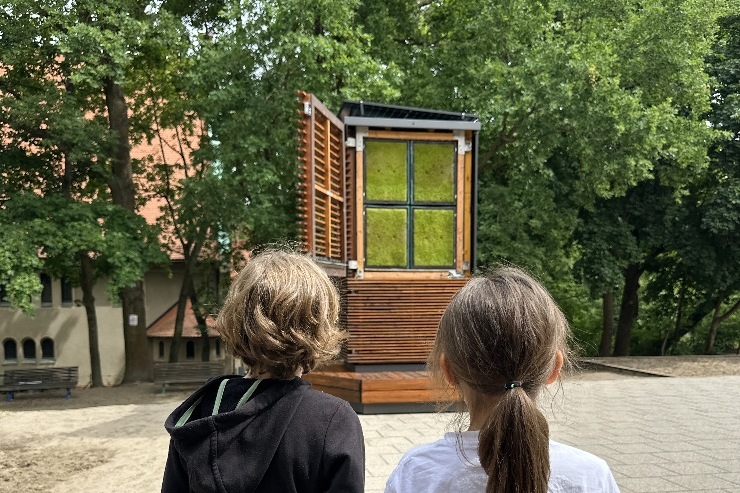
Photo: GCS