
When Moss Sees Us – A New Perspective on Urban Air for World Environment Day
“Have you ever truly seen moss?
Not just in passing …”
This is how a poem by Siegfried von Vegesack begins, inviting us to take a closer look. Moss is more than a green layer in the shade. It is a living cosmos – full of stories shaped by light, rain, and time. Quiet, resilient, and often overlooked.
But what if we reversed the perspective?
What if it were not us observing moss, but moss observing us?
This year’s World Environment Day is centered around the forward-looking theme “Climate Action”. It reminds us that it is no longer enough to simply talk about climate change – we must act. Under the motto “Inspired by Nature. For Climate. For Our Future,” nature itself comes into focus as one of the strongest sources of inspiration for true climate resilience. The Earth is sending us clear signals in the form of urban heat islands and declining air quality in our cities. Our response? A technology that learns from nature and harnesses its inherent capabilities.
Because sometimes the most effective climate measures are not found in what is loud or large-scale, but in the ingenuity of a plant that has been demonstrating how to cope with extreme conditions for 400 million years. Our moss filters are exactly that answer: A creative symbiosis of nature and high-tech that makes environmental impact measurable in the heart of the urban environment.
So who better to give a voice to on World Environment Day than one of the Earth’s oldest survivors – guiding us toward a more resilient future?
Let the mosses speak!
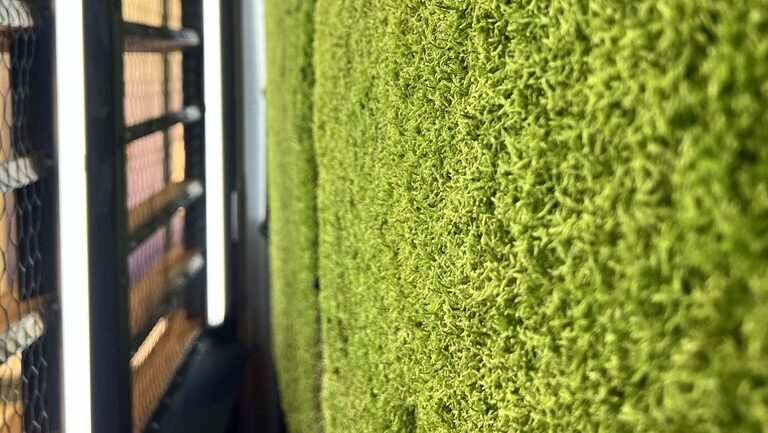
Photo: GCS
The World from the Moss Perspective
- People: To moss, we must seem like giants rushing past everything – fleeting, loud, and often without truly noticing.
- Facades: What appear to us as grey concrete walls are, to moss, steep cliffs where new life can take hold.
- Rain: What we experience merely as wet weather, moss experiences as an entire ocean – as a „green sponge”.
- Time: While we live in seconds, schedules, and deadlines, moss grows quietly yet relentlessly – up to 16 times faster in our moss farm than in nature.
- Resilience: When other plants fail, moss endures. It adapts and regenerates.
This different perspective shows us that mosses are true survival artists: quiet, patient, and unobtrusive – yet full of strength. It is precisely this strength that makes them a key element in creating greener, more livable urban spaces for the future.
Steady. Breathing. Filtering: Moss as a Natural Superpower
Mosses possess unique, remarkable characteristics that make them genuine environmental performers:
- extensive leaf surface area: Fine dust particles adhere to tiny structures, creating a natural filtration effect.
- evaporate cooling: Moss stores and releases water across its entire surface – acting like a small green air-conditioning system.
- high resilience: Moss does not require deep roots, withstands dry periods, and regenerates as soon as water returns.
- Sponge City Principle: Moss absorbs water, stores it, and releases it gradually – an important contribution to flood prevention and healthy urban microclimates.

Photo: GCS
Nature and Technology Hand in Hand
To unlock the full potential of these high-performance plants, we combine their natural capabilities with innovative technology:
- regenerative biofilters: Vertical moss mats are used in moss modules within CityTree, CityBreeze and WallBreeze. Through active ventilation, polluted air is directed through the moss in a targeted way.
- measurable impact: Filtration of up to 82% of particulate matter, cooling of the surrounding environment by up to 4 K (°C), and humidification through natural evaporation.
- compact and efficient: On just 9 m² of surface area, the impact of a CityTree can equal that of up to 81 young trees.
- digitale transparency: Sensors capture air quality, plant condition, and weather data in real time, making impact visible in the dashboard – from ESG reporting to public display screens in urban spaces.
- circular approach: In our own moss farm, the moss mats used in our systems are revitalized, monitored, and cultivated in a resource-efficient manner. Under ideal conditions, they now grow up to 16 times faster than in nature. Instead of taking around four years, they reach a dense, high-performance surface in less than twelve weeks.
This is how we ensure quality, availability, and consistent performance in the field.
Why We Need the Moss Perspective Today More Than Ever
When we look at cities from the perspective of moss, we understand:
- Impact may appear subtle – and still be enormous.
- Environmental innovation often begins on a small scale.
- Natural systems can provide answers to urban challenges.
- Healthy cities need solutions that integrate air quality, climate resilience, and quality of life.
Especially on World Environment Day, one thing becomes clear: environmental impact must not remain abstract. It can become local, tangible, and measurable – in everyday life.
Green City Solutions makes this superpower visible, usable and scalable.
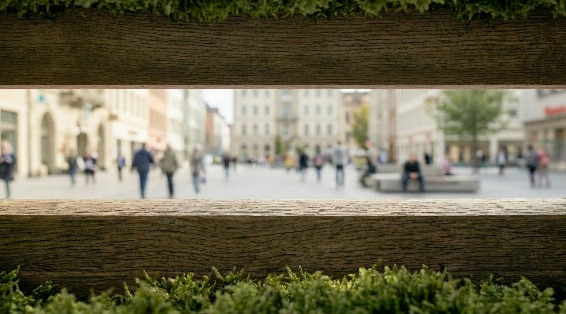
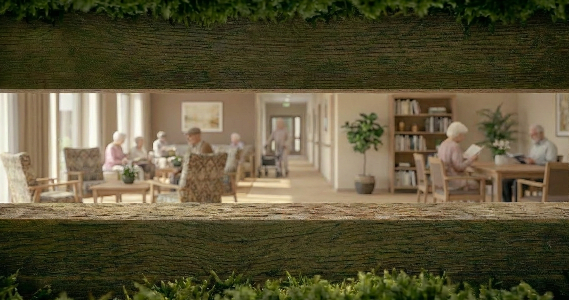

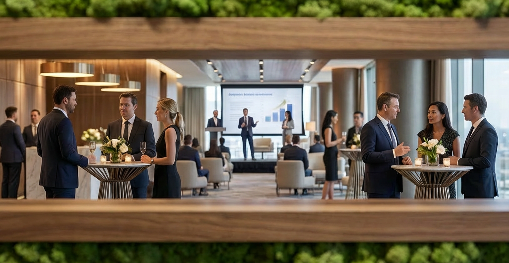
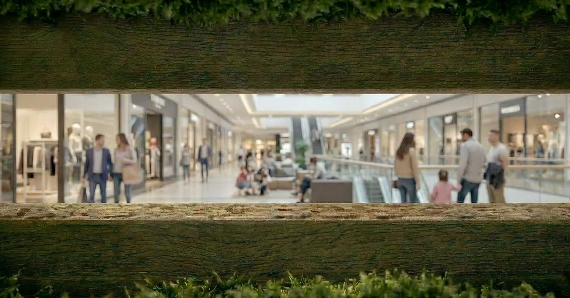
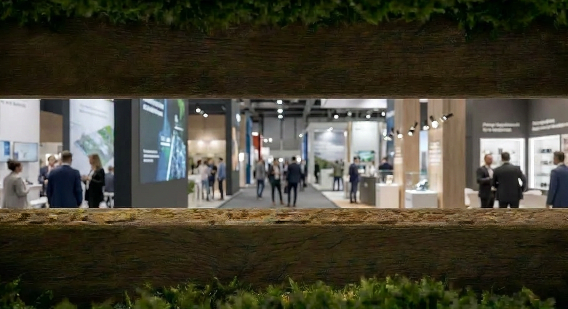
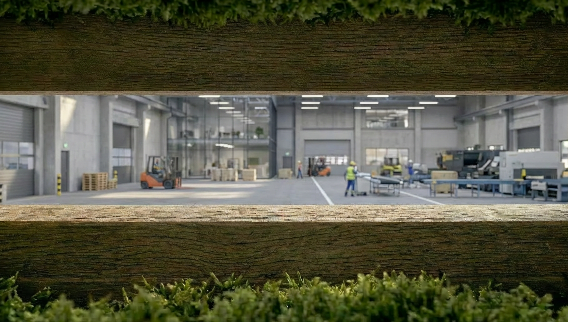
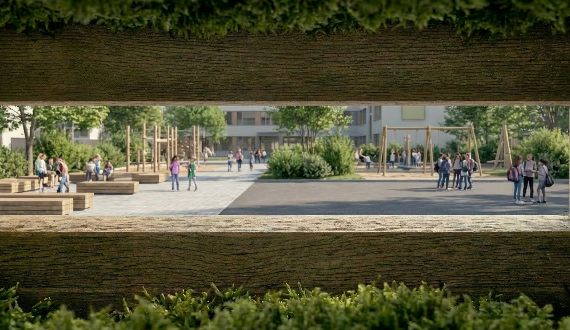

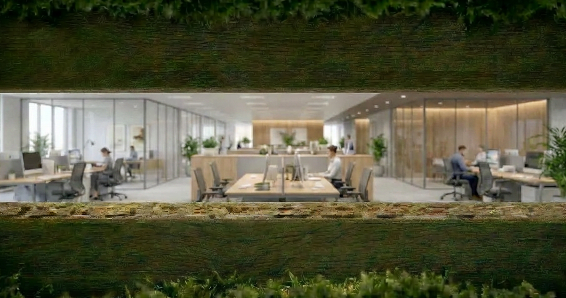
A view through the slats – AI-generated moss perspective; image source: Green City Solutions / AI-generated with ChatLLM by Abacus.AI
The Moss Perspective: Where Moss Tangibly Improves Our Environment
🏢 Office Complex

🛍 Shopping Center & Atrium

🏭 Industrial Hall & Production Environment

🎡 Trade Fairs & Events
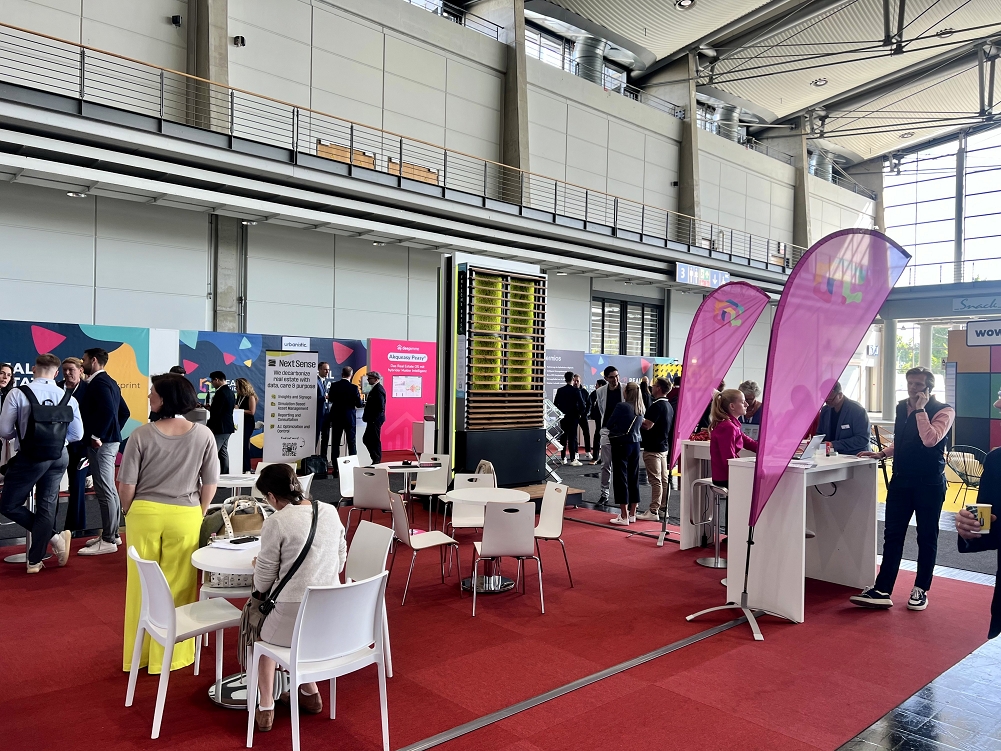
🌍 Public Square

🏫 Schoolyard
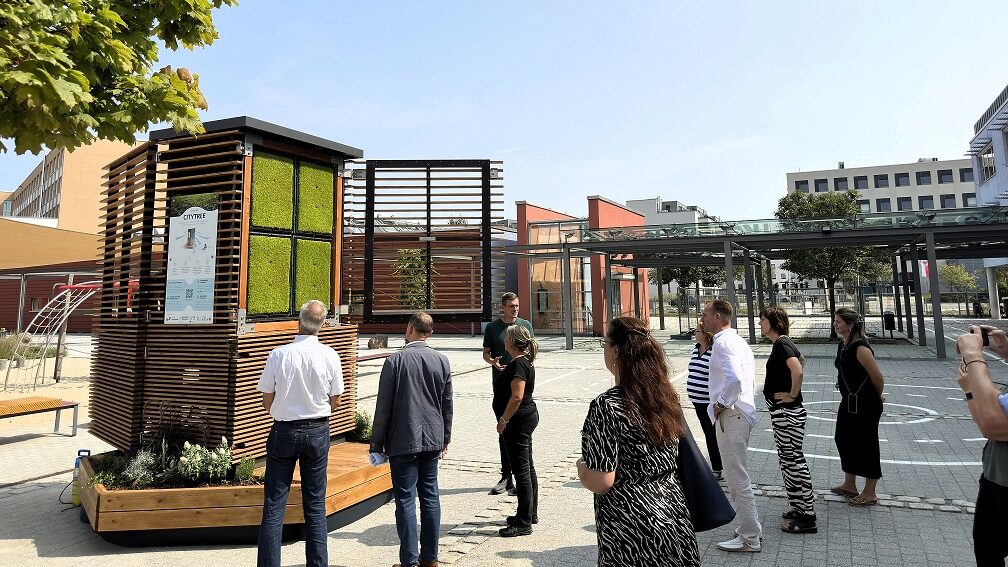
👵 Senior Care Facility

And Now?
World Environment Day reminds us that environmental responsibility must not only be thought of globally, but implemented locally.
Whether on a schoolyard, at a trade fair, in a shopping center, senior residence, industrial hall, or public square: CityTree, CityBreeze and WallBreeze transform spaces into measurable fresh-air oases.
Which fresh-air concept is the right fit for your district, your company, or your city?